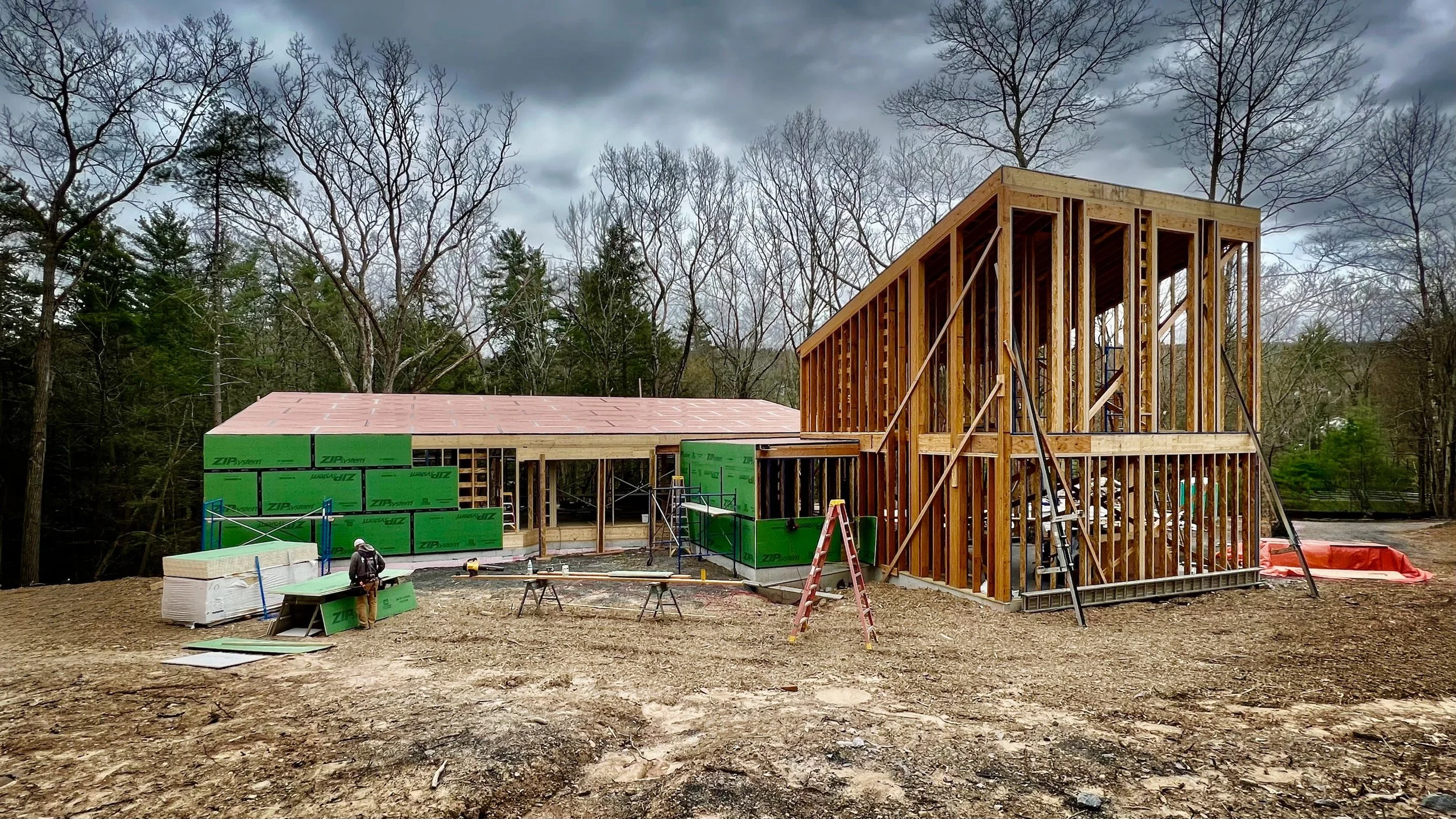
Each project follows a consistent sequence from feasibility through construction and use.
Each phase builds on the last. The goal is alignment — so decisions hold up when drawings give way to weather and time.
-
Phase 1 — Context & Feasibility
Every project begins by defining constraints before proposing solutions. The work starts with what is real: site conditions, access, zoning limits, infrastructure, and budget. Performance priorities are established early, not added later.
The result is clarity about what the project is — and what it is not.
-
Phase 2 — Design Development
Design development translates intent into decisions that can be built.
Form, structure, envelope, and systems are evaluated together, with construction realities in view. Input from engineers, trades, and cost feedback is integrated early, not after the fact.The result is a coordinated design that can be built as intended.
-
Phase 3 — Construction & Oversight
Construction is treated as a continuation of design. Alignment between intent and execution remains the focus. Critical phases are closely observed. Field decisions are made deliberately. Concealed work receives as much attention as finished surfaces.
The result is a building that performs as intended.
-
Phase 4 — Use & Experience
Buildings are observed over time. Materials weather. Systems run. Maintenance reveals whether decisions were sound. That knowledge carries forward. The result is judgment that deepens with each project. The sequence remains consistent, but each project responds to its own conditions. Some of these decisions are visible.
Many are not.